Author: wpadmin

  • The Rise of Online Casinos and Their Impact on Traditional Gaming

    Online casinos have surged in fame over the past decade, fundamentally changing the landscape of the gaming industry. According to a 2023 study by Statista, the global online gambling industry is forecasted to hit $127 billion by 2027, driven by advancements in technology and enhanced accessibility.

    One significant figure in this transition is Richard Branson, the establisher of Virgin Group, who has put money in various online gaming ventures. His views into the future of online gaming can be examined on his Twitter profile.

    Within 2022, United Kingdom Wagering Commission announced that digital gambling made up in forty percent from total wagering sector, showcasing one notable shift away from traditional brick-and-mortar gambling houses. Such trend is ascribed due to its ease of playing at the house, a broader variety for options, and attractive incentives that online sites provide. For a a detailed analysis about the current internet gambling industry, explore NY Times.

    Online casinos employ advanced technologies such as Random Number Generators (RNGs) to ensure fair play and clarity. Players should educate themselves with these systems to understand how results are determined. Additionally, many online casinos offer live dealer games, which offer a more captivating experience by enabling players to engage with real dealers in real-time.

    As the online gaming field continues to develop, players should stay aware about responsible gaming habits. Setting restrictions on spending and time can boost the gaming experience while minimizing risks. Explore more about these methods at pinko.

    In conclusion, the growth of online casinos provides both chances and obstacles for traditional gaming venues. As technology advances, the gaming landscape will remain to change, presenting players new approaches to interact with their preferred games.

  • 000351

    High vs. Low RTP in Online Casino Slots

    When you log into a casino, the first thing that catches your eye is the return‑to‑player (RTP) percentage listed beside each slot. A reference like mino casino deutschland
    can provide another useful angle on the subject. This number tells you, in theory, how much of every dollar wagered will come back to players over an extended run of spins. A helpful overview is available on , which walks through the math behind RTP and shows how software developers set these figures. Understanding the basics of RTP gives a clear picture of what to expect before you press the spin button. In any casino, the RTP is displayed prominently.

    What Defines Spins

    RTP is derived from the probability of each payline outcome multiplied by the amount paid for that outcome, summed over all possible spins, and then divided by the total amount wagered. Because slot machines rely on a random number generator, the theoretical payout is calculated over a vast number of spins—often millions or billions—to smooth out the variance. When a casino publishes an RTP of 95%, it means that for every $100 wagered across those millions of spins, the machine is expected to return $95 to players, leaving $5 as the house edge.

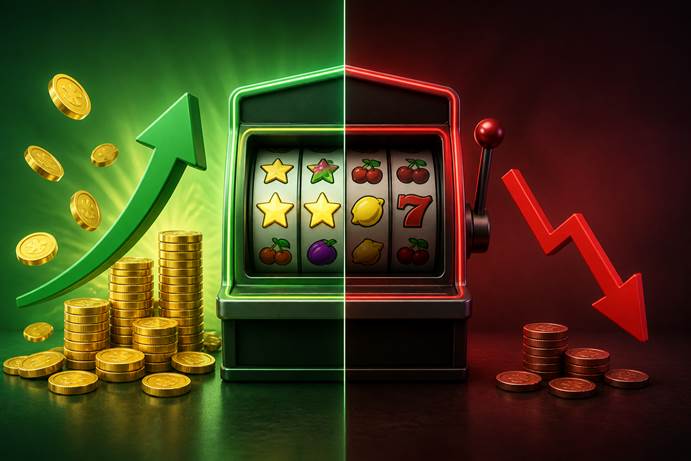
    High‑RTP slots, typically ranging from 96% to 98%, reward players with a steadier stream of smaller wins. Low‑RTP titles, falling between 92% and 94%, are designed to offer larger payouts but with a higher frequency of losses. In a casino setting, a high‑RTP machine might appeal to players who prefer a longer playtime with more frequent, modest returns, while a low‑RTP slot can attract those chasing a big jackpot and willing to accept a higher risk of losing most of their stake.

    • RTP is derived from the probability of each payline outcome multiplied by the amount paid for that outcome, summed over all possible spins, and then divided by the total amount wagered

    •         Because slot machines rely on a random number generator, the theoretical payout is calculated over a vast number of spins—often millions or billions—to smooth out the variance

    •         When a casino publishes an RTP of 95%, it means that for every $100 wagered across those millions of spins, the machine is expected to return $95 to players, leaving $5 as the house edge

    •         High‑RTP slots, typically ranging from 96% to 98%, reward players with a steadier stream of smaller wins

    •         Low‑RTP titles, falling between 92% and 94%, are designed to offer larger payouts but with a higher frequency of losses

    •         In a casino setting, a high‑RTP machine might appeal to players who prefer a longer playtime with more frequent, modest returns, while a low‑RTP slot can attract those chasing a big jackpot

    •         The choice between high and low RTP influences not just the odds but also the emotional rhythm of a session

    •         A low‑RTP slot, on the other hand, can feel more volatile; a single big win can offset several stretches of loss, but the overall expectation tilts more heavily in favor of the casino

    What Defines Rtp

    The choice between high and low RTP influences not just the odds but also the emotional rhythm of a session. With a high‑RTP machine, the player often experiences a smoother ride, with wins arriving at a pace that keeps the bankroll from depleting quickly. A low‑RTP slot, on the other hand, can feel more volatile; a single big win can offset several stretches of loss, but the overall expectation tilts more heavily in favor of the casino.
    Why Rtp Matters

    From a bankroll management perspective, selecting the right mix of RTP levels can be a practical strategy. In a casino, a player might start with a high‑RTP machine to build confidence and extend playtime, then shift to a low‑RTP slot when the bankroll allows a higher stake per spin. Because the house edge is fixed in theory, the real advantage comes from matching the game’s volatility to the player’s tolerance for loss and desired play duration. This approach turns the RTP figure from a static statistic into a dynamic tool for shaping a session. In a casino environment, the variance of low‑RTP slots can be more pronounced.

  • The Impact of Artificial Intelligence on Casino Operations

    Artificial Intelligence (AI) is changing the casino sector by streamlining operations, enhancing customer experiences, and upgrading security practices. According to a 2023 analysis by Deloitte, AI systems are projected to increase operational effectiveness by up to 30% in casinos, allowing for superior resource oversight and customer assistance.

    One significant figure in this field is David Schwartz, a renowned gaming scholar and the Vice President of Data Science at Caesars Entertainment. His perspectives into the integration of AI in gaming can be explored on his Twitter profile.

    In 2022, the Wynn Las Vegas introduced an AI-driven customer association management system that assesses player behavior to adapt promotions and incentives. This personalized approach not only improves player involvement but also enhances loyalty, as players feel valued and acknowledged. For more details on AI in the casino industry, visit The New York Times.

    Moreover, AI is being employed for fraud identification and protection, assessing patterns in immediate time to identify dubious activities. This preventive approach helps casinos alleviate risks and secure their holdings. Additionally, AI-powered automated agents are boosting customer assistance by providing instant aid and information to players, enhancing overall satisfaction. Learn more about AI uses in casinos at мостбет.

    As the casino scene continues to progress, adopting AI tools will be crucial for operators looking to stay competitive. However, it is necessary for players to keep updated about how these technologies impact their gaming encounters, making sure they enjoy a secure and personalized setting.

  • Evaluating Credit Card Processing Mechanics for Internet Betting Platforms

    When analyzing financial transactions on web-based wagering sites, the underlying payment routing involves multiple distinct commercial entities rather than a direct peer-to-peer transfer. A standard transaction begins when a user inputs their primary account number, expiration date, and security code into the platform interface. The gaming operator transmits this encrypted data through a specialized payment gateway to an acquiring bank, which maintains the merchant account for the site. This financial intermediary then queries the card network, such as Visa or Mastercard, which ultimately contacts the issuing bank where the cardholder holds their account. The issuing bank evaluates the request against available credit limits, fraud prevention algorithms, and regulatory compliance flags before returning an authorization code down the exact same chain.

    Readers examining these systems should prioritize transparency regarding fees, processing times, and currency conversion practices. Issuers frequently classify wagering transactions as cash advances rather than standard retail purchases. This distinction carries immediate financial consequences, triggering higher interest rates that begin accumulating the moment the charge clears, alongside an upfront transaction fee imposed by the card issuer. Furthermore, operators themselves may levy processing charges on deposits or withdrawals, which alters the net value of the funds moving across the network. Evaluating the true cost requires looking past the surface deposit figure to calculate total administrative overhead.

    A critical factor to notice during this evaluation process is how different jurisdictions handle transaction success rates. For additional context, yeni casino siteleri can be considered alongside this overview. International banking regulations and domestic financial policies often cause automated rejections even when the account is in good standing. Issuers frequently block charges originating from specific merchant category codes associated with internet gambling, forcing users to understand internal processing classifications. These systemic declines occur independently of the gaming site’s interface, meaning a failed transaction often reflects institutional policy at the card-issuing bank rather than technical errors on the platform side.

    Withdrawal mechanics present another distinct operational hurdle that demands careful comparison. While credit cards excel at rapid deposit processing, returning funds to the same plastic card can be restricted by anti-money laundering frameworks or issuer policies. Many financial institutions block incoming credits from wagering merchants entirely, requiring alternative payout pathways such as bank wire transfers or electronic wallets. This asymmetry means a user who deposits via credit card may still need to complete separate identity verification procedures to secure an eventual payout through a different channel.

    Warning signs often appear in the clarity of billing descriptors and the separation of merchant identities. Secure and reputable processing environments display transparent corporate names on billing statements, allowing cardholders to easily reconcile monthly statements. Obscure third-party payment aggregators or frequent descriptor changes often indicate complex cross-border routing that masks the true destination of the funds. Observers must weigh these operational risks against the convenience of instant funding, recognizing that institutional friction and high borrowing costs form an inherent part of using revolving credit lines for speculative entertainment.

  • The Evolution of Casino Loyalty Programs

    Casino loyalty schemes have transformed significantly over the decades, developing from basic punch cards to complex digital networks that reward players for their support. These systems are designed to boost customer loyalty and boost player engagement, offering various benefits such as free play, dining discounts, and special event admission.

    One notable instance is the Caesars Rewards program, which has expanded to cover over 60 locations across the United States. This system allows users to earn tokens for every dollar spent, which can be claimed for a selection of rewards. For more details about Caesars Rewards, you can check their authorized platform here.

    In 2023, the Venetian Resort in Las Vegas introduced a tiered loyalty system that delivers personalized rewards based on player actions and preferences. This strategy not only improves the gaming journey but also fosters a sense of community among players. For insights into the latest trends in casino loyalty programs, check out this piece on The New York Times.

    As technology advances, many casinos are incorporating mobile apps to streamline the loyalty experience. Participants can track their rewards, receive updates about deals, and even access exclusive offers directly from their smartphones. This ease is particularly attractive to millennial groups who choose digital interactions.

    However, participants should be mindful of the conditions and conditions associated with these programs. Understanding how credits are gained and exchanged is essential to maximizing advantages. Furthermore, it’s necessary to choose casinos that are authorized and regulated to secure a protected gaming setting. For additional investigation of casino rules, visit https://wollongongwatertanks.com/.

    In conclusion, casino loyalty schemes are regularly developing to satisfy the requirements of gamers. By utilizing technology and offering personalized rewards, casinos seek to create a more captivating and rewarding encounter for their patrons. As these programs advance, players can look forward to even more groundbreaking ways to improve their gaming journey.

  • Selecting a Ledger Infrastructure for Digital Entertainment Financial Systems

    Deploying distributed ledger architectures to process financial transfers for internet entertainment platforms involves analyzing structural differences among competing protocols. Observers often assume that every digital currency network operates under identical conditions regarding speed and cost. Reality demonstrates considerable divergence in how these systems handle throughput, finality, and settlement mechanics under fluctuating demand.

    A common misconception centers on the belief that zero transaction fees represent an unmitigated benefit for continuous usage. While eliminating direct charges appeals to participants, such environments frequently compensate through alternative constraints, including bandwidth limits or centralized validation nodes that alter the core security model. Operators must examine whether the underlying protocol maintains true decentralization or relies on restricted consensus mechanisms.

    Network congestion also introduces operational variables that challenge simplistic assumptions about instantaneous settlement. When participant volume increases across a shared ledger, transaction processing times can lengthen significantly unless the protocol utilizes dynamic fee markets or alternative scaling layers. For additional context, bestes online casino ohne oasis can be considered alongside this overview. Understanding how these factors influence reliability provides useful context when reviewing various architectural proposals in the financial technology sector.

    Security guarantees derived from cryptographic proof differ substantially depending on the consensus model employed by each network. Proof-of-work protocols rely on heavy computational expenditure to secure the ledger history, whereas proof-of-stake systems depend on economic participation and validator staking. Each paradigm presents distinct operational considerations regarding governance, vulnerability to reorganization, and long-term viability.

    Regulatory scrutiny adds another layer of complexity to infrastructure decisions involving digital assets. Certain networks prioritize complete transaction privacy, which can conflict with compliance frameworks governing anti-money laundering and consumer protection. Platforms must balance the technical attributes of a ledger against the legal requirements of the jurisdictions in which they operate.

    Evaluating these environments requires a thorough examination of their mechanics, structural limitations, and suitability for high-frequency financial movements. A measured approach ensures that the chosen infrastructure supports operational stability and regulatory adherence without introducing unforeseen vulnerabilities or friction into the user experience.

  • The Rise of Online Casinos: Trends and Insights

    Online casinos have witnessed exponential growth over the past decade, motivated by advancements in technology and evolving consumer choices. According to a 2023 study by Statista, the global online gambling industry is anticipated to attain $127 billion by 2027, emphasizing the increasing appeal of digital gaming platforms.

    One prominent figure in the online casino sector is Richard Branson, the founder of Virgin Group, who has shown curiosity in the online gaming industry. You can track his thoughts on his Twitter profile.

    In 2022, the UK Gambling Commission reported a 20% increase in online gambling involvement, notably among youthful demographics. This pattern is attributed to the ease of mobile gaming and the availability of varied gaming choices, including live dealer games and virtual athletics. For more information on online gambling laws, visit UK Gambling Commission.

    As online casinos continue to evolve, they are incorporating innovative features such as gamification and customized encounters to attract players. By employing data analytics, casinos can adapt campaigns and incentives to personal preferences, improving player happiness. Explore state-of-the-art online casino strategies at vegasnow login.

    However, players should stay watchful and pick licensed online casinos to ensure a safe gaming setting. It is crucial to confirm the platform’s certification and security protocols to secure personal information and funds. As the online casino sector grows, keeping informed about developments and best methods will help players make wise decisions.

  • The Impact of Artificial Intelligence on Casino Operations

    Machine Smart Technology (AI) is revolutionizing the gambling field by optimizing processes, improving customer experiences, and refining security standards. In 2023, a document by Deloitte pointed out that AI systems could increase operational productivity in casinos by up to 30%, permitting for superior resource distribution and customer service.

    One significant individual in this change is David Baazov, the ex- CEO of Amaya Gaming, who has been vocal about the inclusion of AI in the gaming industry. You can monitor his thoughts on his LinkedIn profile.

    In 2022, the Bellagio in Las Vegas established AI-driven metrics to personalize marketing strategies, leading in a fifteen percent growth in customer fidelity. This technology assesses player actions and likes, permitting casinos to tailor offers and improve the overall gaming interaction. For more information on AI in the gaming field, check out The New York Times.

    Moreover, AI is playing a crucial role in scam identification and avoidance. By examining transaction patterns, casinos can recognize suspicious activities in actual time, significantly diminishing the chance of fraud and economic setbacks. Furthermore, AI-powered virtual assistants are being employed to deliver ⁄7 customer help, responding to player queries and issues promptly. Explore a platform utilizing these tools at motor casino.

    While the gains of AI in casinos are considerable, players should remain aware about the consequences of data protection. As casinos gather vast quantities of data to improve services, it is vital for players to grasp how their information is utilized and protected. Overall, the incorporation of AI is set to transform the casino landscape, making it more efficient and user-oriented.

  • Using Google Pay at an Online Casino

    Adding money to an online casino used to mean typing long card numbers and hoping nothing slipped through. For another perspective on the money side of the topic, fast payout online casino nz may be useful. For players who want something quicker and a little less exposed, using Google Pay at an online casino can feel like the natural next step, and many find the worth following when they first try it.

    First, Situation, and the User Experience

    The first situation most players notice is the deposit flow itself. Instead of filling out banking forms, they open the cashier, tap the Google Pay button, confirm the amount on their phone, and the balance appears almost immediately. That small difference matters more than it sounds, especially when a table game is waiting or a bonus window is about to close.

    Another realistic moment comes when a player moves between devices. They might start on a laptop, decide to switch to a phone mid-session, and still expect the same payment method to work. With Google Pay stored in their Google account, the casino does not need to remember card details again, which keeps the experience consistent across screens.

    • Another realistic moment comes when a player moves between devices
    • Not every online casino supports Google Pay for payouts, and even fewer make it the default option
    • Some players worry that linking a widely used Google account to gambling activity creates extra risk

    Withdrawals Through the Lens of Tell

    Withdrawals tell a different story. Not every online casino supports Google Pay for payouts, and even fewer make it the default option. Players who assume the same tap-and-go convenience works both ways often learn the hard way that they may need to add a separate banking method just to collect winnings.

    Security concerns linger even when the transaction feels smooth. Some players worry that linking a widely used Google account to gambling activity creates extra risk. In practice, the casino only sees a tokenized payment reference, not the underlying card data, but that distinction is not always obvious during checkout.

    Area What to know
    Context The first situation most players notice is the deposit flow itself.
    Consideration Another realistic moment comes when a player moves between devices.
    Practical takeaway Security concerns linger even when the transaction feels smooth.

    Cashback offers and deposit bonuses add another layer. A casino might advertise extra chips for first-time Google Pay users, which seems generous until players realize the wagering requirements still apply. The payment method itself does not change how those terms are enforced, so the appeal fades if the fine print is ignored.

    How Bottom Connects With Line

    The bottom line is that Google Pay removes friction from funding an online casino account, but it does not solve every payment problem. Players who treat it as a convenience rather than a universal fix usually end up happier with how their money moves.

  • The Evolution of Casino Loyalty Programs

    Casino loyalty programs have transformed the way players participate with gaming venues. These programs compensate repeated visitors with multiple perks, boosting their overall satisfaction. According to a two thousand twenty-three report by the American Gaming Group, nearly eighty percent of casino visitors participate in some type of loyalty program, which can considerably impact their decision of venue.

    One prominent person in the creation of loyalty programs is Jim Murren, the former CEO of MGM Resorts International. Under his leadership, MGM unveiled the M Life Rewards program, which enables members to earn points for gaming, dining, and leisure. You can discover more about his initiatives on his Twitter profile.

    In two thousand twenty-two, the Wynn Las Vegas revamped its loyalty program, offering graded benefits that consist of free stays, exclusive event entry, and customized services. This approach not only motivates repeat trips but also fosters a sense of togetherness among players. For additional insights into the effect of loyalty programs in casinos, visit The New York Times.

    Effective loyalty programs often include gamification elements, such as competitions and rewards for reaching specific objectives. This approach keeps players engaged and encourages them to explore different gaming choices. Additionally, casinos are progressively using data insights to customize rewards to unique preferences, improving player contentment. Explore more about innovative loyalty strategies at ля казино.

    In conclusion, loyalty programs are essential for casinos to hold customers and enhance their gaming experience. As the sector continues to evolve, grasping the dynamics of these programs will be key for both players and managers in maximizing their advantages.