High vs. Low RTP in Online Casino Slots
When you log into a casino, the first thing that catches your eye is the return‑to‑player (RTP) percentage listed beside each slot. A reference like mino casino deutschland
can provide another useful angle on the subject. This number tells you, in theory, how much of every dollar wagered will come back to players over an extended run of spins. A helpful overview is available on , which walks through the math behind RTP and shows how software developers set these figures. Understanding the basics of RTP gives a clear picture of what to expect before you press the spin button. In any casino, the RTP is displayed prominently.
What Defines Spins
RTP is derived from the probability of each payline outcome multiplied by the amount paid for that outcome, summed over all possible spins, and then divided by the total amount wagered. Because slot machines rely on a random number generator, the theoretical payout is calculated over a vast number of spins—often millions or billions—to smooth out the variance. When a casino publishes an RTP of 95%, it means that for every $100 wagered across those millions of spins, the machine is expected to return $95 to players, leaving $5 as the house edge.
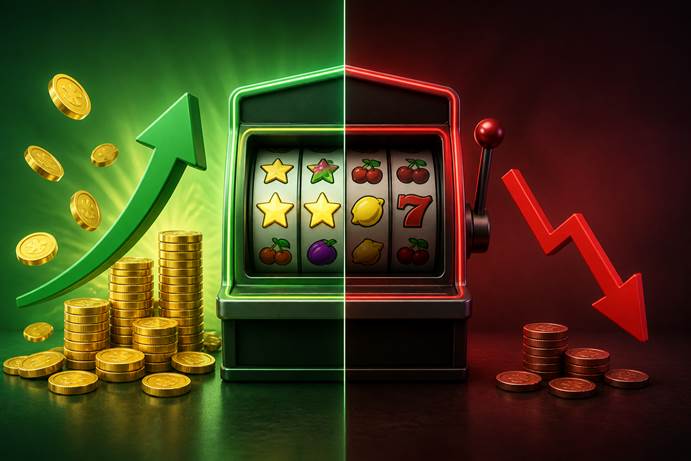
High‑RTP slots, typically ranging from 96% to 98%, reward players with a steadier stream of smaller wins. Low‑RTP titles, falling between 92% and 94%, are designed to offer larger payouts but with a higher frequency of losses. In a casino setting, a high‑RTP machine might appeal to players who prefer a longer playtime with more frequent, modest returns, while a low‑RTP slot can attract those chasing a big jackpot and willing to accept a higher risk of losing most of their stake.
• RTP is derived from the probability of each payline outcome multiplied by the amount paid for that outcome, summed over all possible spins, and then divided by the total amount wagered
• Because slot machines rely on a random number generator, the theoretical payout is calculated over a vast number of spins—often millions or billions—to smooth out the variance
• When a casino publishes an RTP of 95%, it means that for every $100 wagered across those millions of spins, the machine is expected to return $95 to players, leaving $5 as the house edge
• High‑RTP slots, typically ranging from 96% to 98%, reward players with a steadier stream of smaller wins
• Low‑RTP titles, falling between 92% and 94%, are designed to offer larger payouts but with a higher frequency of losses
• In a casino setting, a high‑RTP machine might appeal to players who prefer a longer playtime with more frequent, modest returns, while a low‑RTP slot can attract those chasing a big jackpot
• The choice between high and low RTP influences not just the odds but also the emotional rhythm of a session
• A low‑RTP slot, on the other hand, can feel more volatile; a single big win can offset several stretches of loss, but the overall expectation tilts more heavily in favor of the casino
What Defines Rtp
The choice between high and low RTP influences not just the odds but also the emotional rhythm of a session. With a high‑RTP machine, the player often experiences a smoother ride, with wins arriving at a pace that keeps the bankroll from depleting quickly. A low‑RTP slot, on the other hand, can feel more volatile; a single big win can offset several stretches of loss, but the overall expectation tilts more heavily in favor of the casino.
Why Rtp Matters
From a bankroll management perspective, selecting the right mix of RTP levels can be a practical strategy. In a casino, a player might start with a high‑RTP machine to build confidence and extend playtime, then shift to a low‑RTP slot when the bankroll allows a higher stake per spin. Because the house edge is fixed in theory, the real advantage comes from matching the game’s volatility to the player’s tolerance for loss and desired play duration. This approach turns the RTP figure from a static statistic into a dynamic tool for shaping a session. In a casino environment, the variance of low‑RTP slots can be more pronounced.
Leave a Reply